• Languages

    Bristol Airport language microsites

    Please choose your language:

    • Deutsch
    • Español
    • Français
    • Italiano
    • Polski
    • Cymraeg
  • About us
  • Mobile version
  • Contact us
  • My Account
Join Rewards

For exclusive offers & latest news

Bristol Airport
Search
  • Home
  • Arrivals and Departures
  • Flights from Bristol
  • Airport Parking
  • Getting to the Airport
  • At the Airport
  • Shops and Restaurants
  • Rewards
  • Flight and Holiday Offers
Home > Media centre > News Releases > Airport Application balances Economy & Environment

Airport Application balances Economy & Environment

News Release (16/06/09)
Tweet
Terminal development

Proposals to balance economic benefits with environmental initiatives are included in Bristol International Airport’s (BIA) planning application for its future development, submitted to North Somerset Council today (Tuesday 16 June).

The proposals, designed to enable BIA to handle 10 million passengers a year and create more than 3,500 new jobs across the region, include a range of measures to mitigate the impact of the airport’s activity on the local community and the environment.

The final form of the planning application comes after an extensive consultation exercise with local communities in North Somerset and the Chew Valley area, parish councils, the four unitary councils in the former Avon area and key regional stakeholders such as SWRDA, the CBI and GWE Business West.

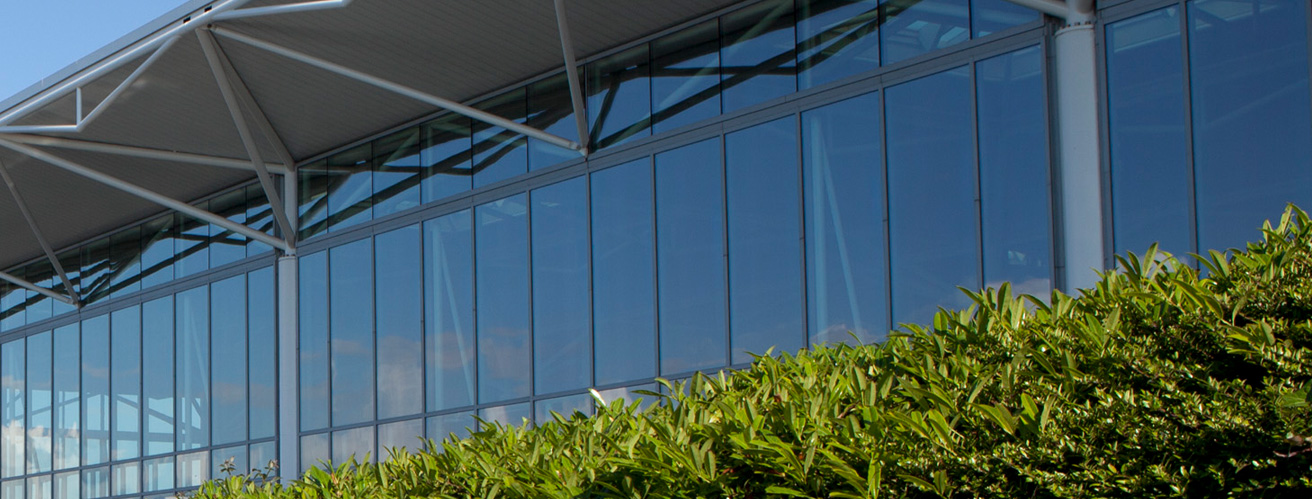
The proposed development is focused on the current airport site and includes an expansion of the existing terminal to double its overall floor area to house additional check-in desks, security channels and an enlarged departure lounge and arrivals area.  A new public transport interchange will sit on top of a multi-storey car park, with covered pedestrian access linking both to the terminal.  Walkways and air bridges will provide direct access to aircraft, reducing the need for passengers to use buses to board and disembark flights.

The plans incorporate several design changes suggested by local people including changes to the location of new parking and taxiway layouts, lowering the height of the proposed multi-storey car park, as well as a wide range of mitigation measures focused on minimising the impact on the local community and the environment.

Robert Sinclair, Chief Executive Officer of Bristol International Airport, said: “Over the last six months we have listened to a wide range of views relating to the development of the airport.  We have paid particular attention to the views of the local community, who are most directly affected by these proposals. 

“The application has been modified to address the key concerns raised.  It now strikes the right balance between allowing the sustainable development of the airport to meet the long-term demand for air travel to and from this region, while also reducing and mitigating the environmental effects.”

The environmental mitigation measures include the setting up of an Airport Environmental Improvement Fund with BIA proposing to contribute £100,000 per year, a figure that will increase in line with passenger numbers.

This will provide an on-going source of funds for local projects to improve roads, reduce noise and enhance the local environment.

In response to requests from the local community, the airport has introduced a new cap on night flights, as well as maintaining the current night noise quota.  The airport will also commit to maintaining CO2 emissions at or below 2007 levels with 20 per cent of the additional energy required by the proposed development coming from on-site renewable sources.

Emissions from flights will be controlled through the EU Emissions Trading Scheme from 2012 with airline allowances capped at 2005 levels. BIA will also work with airlines to reduce emissions and noise through best practice procedures.

The impact of ground noise on local residents will be reduced by new buildings, noise walls and the installation of fixed ground electrical power on aircraft stands close to the perimeter.

As part of the proposals, BIA has earmarked a total of £9 million for public transport and road improvements. This includes £1 million for local road improvements focused on the A38, £5 million for a public transport interchange next to the new terminal and a £3 million contribution to key sub-regional transport schemes such as the Rapid Transit service to Bristol city centre and the South Bristol Link.

BIA has set itself the challenging target of increasing the number of passengers travelling to and from the airport by public transport to 15 per cent at 10 million passengers a year (from the current level of 10 per cent).

This will be achieved through improvements to the existing Flyer bus service and the development of new services to Weston-super-Mare and Bath.

An economic impact assessment submitted as part of the planning application estimates that the development will create over 3,500 new jobs in the South West, and a Skills and Employment Plan will be created to maximise employment benefits for the local community around the airport, as well as Weston-super-Mare and South Bristol.

The study forecasts that the plans would contribute total additional income of between £1.9 billion and £2.0 billion to the South West region over the period 2008 to 2019/2020.  This includes income generated from the airport’s activities, increased spending by overseas visitors using Bristol International and savings in travel time and costs as a result of business and leisure passengers being able to fly from their local regional airport.

Robert Sinclair continued, “A successful airport is critical to the future prospects of the South West, providing employment, economic benefits, connections for business and a gateway for inbound tourists visiting the region.  We are a vital component of the region’s transport infrastructure. Delaying or doing nothing risks putting the region to the back of the queue for inward investment and providing a poor service to passengers flying out of the airport and visitors arriving in the region.

“By improving facilities here in the South West we can offer a real alternative to the five million passengers from this region currently making time-consuming and expensive journeys by road or rail to fly from Heathrow and other airports in the South East.  There is also an opportunity to increase the number of overseas visitors flying into Bristol International, increasing money spent at local hotels, restaurants and tourist attractions.”

“I believe these proposals are the best way to ensure Bristol International generates benefits to the South West economy for many years to come, while at the same time recognising the impacts on local people and providing robust measures to monitor, control and mitigate these impacts.”

Although the number of passengers using Bristol International in recent months has been affected by the current economic conditions, development is required to meet forecasts which show long-term growth in demand for travel to and from the South West. 

Significant congestion already exists at peak periods, and summer 2009 is expected to be the airport’s busiest ever. 

Security search, passport control and car parks will be operating close to capacity, potentially resulting in poor customer service for departing passengers and an unsatisfactory welcome for visitors to the region.

Long-term growth is expected to come from the continued strength of the regional economy, clawing back ‘leakage’ of passengers to Heathrow through the introduction of new services and frequencies, and increased inbound tourism.

The proposals will enable the airport to meet this demand and significantly improve the passenger experience, making it much easier, quicker and more enjoyable to use the airport. 

Robert Sinclair continued:

“We have enjoyed an open and positive dialogue with the local community and listened to the concerns raised.  This has helped us to identify the issues that really matter to them regarding the airport’s future.  The benefits the airport brings are regional, but the impacts are primarily local.  The measures we have proposed will control and mitigate the impacts of this development on local people.”

The planning application has been submitted to North Somerset Council for consideration.

Tweet
  • Media centre
    • News Releases
      • News Release Archive
    • Airport history
    • Facts and figures
    • Filming and photography
    • Media contacts
    • Advertising
  • FlickrBristol Airport
    on Flickr
  • TwitterFollow us
    on Twitter
  • FacebookFacebook
  • YouTubeYou Tube
  • Carbon Trust
  • Travel North Somerset
  • Investors in People

© Copyright Bristol Airport 2013

  • Terms & Conditions
  • Privacy
  • Cookies
  • Accessibility
  • Site map